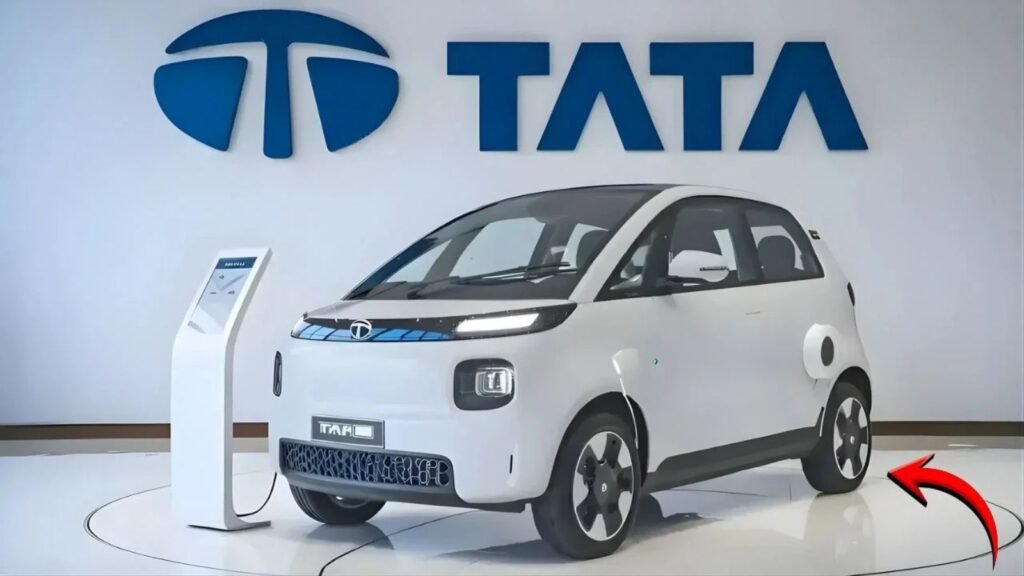
Tata Motors has officially revived one of the most recognizable automotive nameplates in India with the launch of the Tata Nano EV 2026. Once introduced as the “people’s car,” the Nano carried enormous expectations and sparked nationwide conversations about affordable mobility. Now, in an era where electric vehicles are gradually becoming mainstream, the Nano returns with a completely new identity. The Tata Nano EV is no longer just about low-cost transportation—it represents accessible electric mobility for the everyday Indian household.
With rising fuel prices, growing environmental awareness, and government incentives encouraging electric adoption, Tata Motors has strategically positioned the Tata Nano EV as an entry-level EV aimed at first-time car buyers, urban commuters, and budget-conscious families. Instead of targeting a niche audience, Tata is aiming for large-scale adoption. With a claimed driving range of up to 550 km and a starting price that undercuts most electric cars currently available in India, the Tata Nano EV could potentially reshape the affordable EV segment.
Let’s take a detailed look at what this electric revival truly offers.
Key Specifications – Tata Nano EV 2026
| Specification | Details |
|---|---|
| Powertrain | Single Electric Motor |
| Battery Pack | 32 kWh Lithium-ion |
| Claimed Range | Up to 550 km |
| Real-World Range | Approx. 380–420 km |
| Max Power | 55 PS |
| Max Torque | 120 Nm |
| Transmission | Single-speed Automatic |
| Drive Type | Rear-wheel Drive |
| Charging Time (AC) | 6.5 hours |
| Charging Time (DC Fast) | 80% in 60 minutes |
| Seating Capacity | 4 |
| Kerb Weight | Approx. 950 kg |
| Starting Price | ₹5.25 lakh (ex-showroom) |
Exterior Design and Styling
The Tata Nano EV retains the compact footprint that made the original Nano ideal for tight city spaces, but everything else feels more modern and mature. Tata Motors has clearly worked to ensure that this new version does not look like a budget compromise. Instead, the Tata Nano EV adopts a contemporary design language that aligns with Tata’s current EV portfolio.
At the front, the traditional grille has been replaced with a sleek, closed-off panel that signals its electric identity. Slim LED daytime running lights add a modern touch, while the updated headlamp design improves visibility and aesthetics. The body lines are cleaner and more defined compared to the rounded styling of the earlier Nano.
Short overhangs and a tall stance make the Tata Nano EV extremely practical for Indian cities. The revised alloy-style wheels and flush door handles enhance its premium appeal. Despite its compact proportions, the Tata Nano EV looks sturdier and better engineered than before, reflecting Tata’s advancements in safety and design over the past decade.
Motor, Performance and Real-World Indian Driving Experience
Powering the Tata Nano EV is a rear-mounted electric motor producing 55 PS and 120 Nm of torque. While these figures may not sound dramatic, electric motors deliver instant torque, which significantly improves city drivability.
In real-world traffic conditions, the Tata Nano EV feels surprisingly responsive off the line. Quick acceleration from standstill makes it easy to navigate crowded intersections and merge into traffic. The lightweight construction further enhances agility.
The steering is light and precise, making the Tata Nano EV effortless to handle in narrow lanes and congested markets. Its tight turning radius is particularly useful for urban dwellers dealing with limited parking spaces.
On flyovers and ring roads, the Tata Nano EV maintains stable cruising speeds. However, it is clearly designed for city-focused usage rather than high-speed highway touring. The single-speed automatic transmission ensures smooth and uninterrupted power delivery, contributing to a relaxed driving experience.
Driving Range and Efficiency Focus
One of the most important aspects of any electric vehicle is range, and the Tata Nano EV addresses this concern confidently. Tata claims a driving range of up to 550 km on a single charge. While official figures are often optimistic, real-world usage is expected to deliver between 380 and 420 km depending on driving habits and conditions.
For urban commuters covering 20 to 40 km daily, the Tata Nano EV may only require charging once a week. This significantly reduces range anxiety and dependency on public charging infrastructure.
The 32 kWh lithium-ion battery pack strikes a balance between capacity and weight. Combined with the car’s lightweight design, the Tata Nano EV achieves impressive efficiency, making it one of the most practical options in the entry-level EV category.
Charging Convenience
Charging convenience is another major factor for potential EV buyers. The Tata Nano EV supports both standard AC charging and DC fast charging.
Using a home AC charger, the Tata Nano EV can be fully charged in approximately 6.5 hours. For quicker top-ups, DC fast charging can bring the battery from 0 to 80% in about 60 minutes.
This flexibility allows owners of the Tata Nano EV to plan charging according to their routine, whether overnight at home or during short stops at public charging stations.
Interior Comfort and Daily Usability
Step inside the Tata Nano EV, and you will notice a significant improvement over the earlier Nano. The cabin feels more thoughtfully designed and better finished.
The dashboard layout is clean and functional, with improved material quality. While it remains a budget-friendly car, the Tata Nano EV does not feel barebones. Seating comfort has been enhanced with better cushioning and improved under-thigh support.
Headroom remains generous, thanks to the tall roofline. The rear seats are best suited for two adults, making the Tata Nano EV ideal for small families or as a second car. The flat floor design improves accessibility, particularly for elderly passengers.
Storage spaces have been intelligently integrated, ensuring that the Tata Nano EV remains practical for everyday use.
Features and Technology
The Tata Nano EV focuses on offering meaningful features rather than unnecessary extravagance. Higher variants include a touchscreen infotainment system with smartphone connectivity, ensuring access to navigation and media.
A digital instrument cluster provides clear driving information, including battery status and range. Keyless entry and push-button start add convenience.
Connected car features allow Tata Nano EV owners to monitor charging progress, check vehicle location, and track energy consumption via a mobile application. These additions enhance the ownership experience without significantly increasing costs.
Safety, Build Quality and Compliance
Safety has been a strong area of improvement for Tata vehicles in recent years, and the Tata Nano EV benefits from this progress.
The car comes equipped with dual front airbags, ABS with EBD, electronic stability control, and rear parking sensors as standard. The updated platform provides improved structural rigidity and crash protection.
The Tata Nano EV complies with all current Indian safety and EV regulations. Compared to its predecessor, this version offers far greater occupant protection, addressing one of the earlier Nano’s biggest criticisms.
Variants and Colour Options
Tata Motors is offering the Tata Nano EV in three distinct variants to cater to different budgets and needs. Entry-level trims focus on affordability, while higher variants add comfort and connectivity features.
Colour options include Arctic White, Electric Blue, Urban Grey, Lime Green, and Midnight Black. These choices allow Tata Nano EV buyers to select either subtle or youthful shades based on personal preference.
Price Positioning and Competition
With a starting price of ₹5.25 lakh (ex-showroom), the Tata Nano EV positions itself as India’s most affordable electric car. It undercuts rivals like the Tata Tiago EV and MG Comet EV, making electric mobility more accessible.
While competitors may offer larger cabins or more premium interiors, the Tata Nano EV stands out with its low entry price, impressive range, and Tata’s extensive service network.
For cost-conscious buyers, the Tata Nano EV presents a compelling financial case, especially considering savings on fuel and maintenance.
Who Should Buy the Tata Nano EV 2026?
The Tata Nano EV is ideal for:
-
First-time car buyers upgrading from two-wheelers
-
Urban families seeking a practical second vehicle
-
Senior citizens looking for easy city mobility
-
Daily commuters wanting predictable running costs
-
Budget-conscious buyers entering the EV space
For those who primarily drive within city limits, the Tata Nano EV offers a highly sensible solution.
Final Verdict
The Tata Nano EV represents a thoughtful and strategic comeback for a legendary nameplate. Instead of chasing luxury or performance extremes, Tata Motors has focused on practicality, affordability, and real-world usability.
By combining competitive pricing, strong driving range, essential features, and improved safety, the Tata Nano EV lowers the barrier to electric vehicle ownership in India. It may not deliver thrilling acceleration or premium interiors, but it fulfills its purpose remarkably well.
For Indian buyers seeking an affordable and dependable entry into electric mobility, the Tata Nano EV stands out as one of the most practical options currently available.